Sudoku - Classic Sudoku Puzzle
Oakever GamesPuzzle
4.746.74K Reviews
- Version
- 5.74.0
- Installs
- 100.00M
- Age Rating
- Everyone
Screenshots
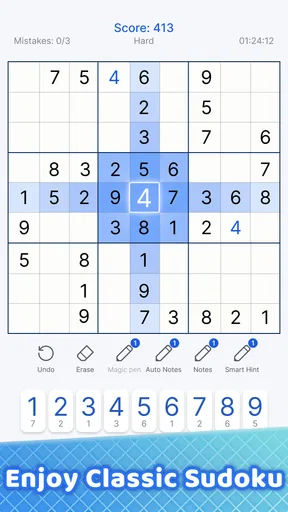
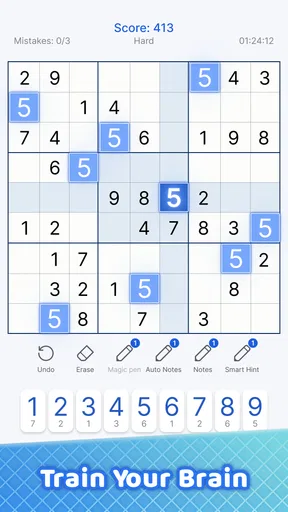
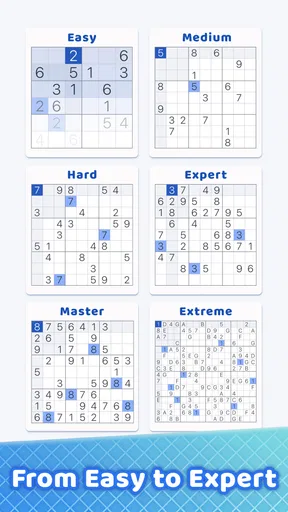

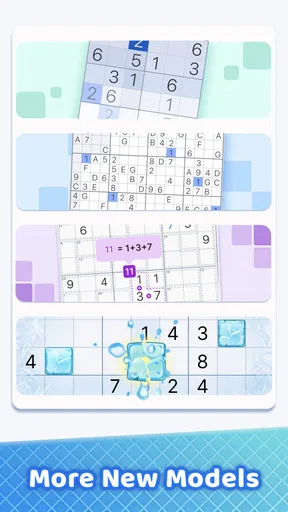
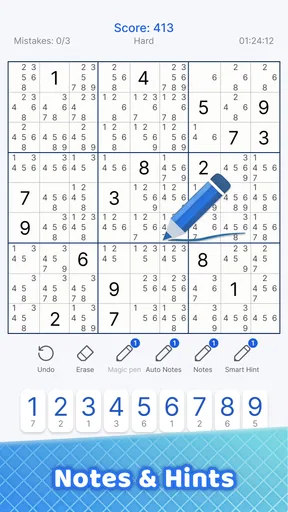


Our Review of Sudoku - Classic Sudoku Puzzle
 Analysis by Appyee
I spent time with Sudoku - Classic Sudoku Puzzle as a quick daily puzzle rather than treating it like a game I had to rush through. That distinction matters. This is a straightforward Sudoku title from Oakever Games, built around the familiar nine-by-nine logic grid, and its appeal comes from how easily it fits into small gaps in the day. I can open it for one puzzle during a quiet coffee break, stop when my attention fades, and return later without needing to learn a complicated system.
It is free to start and suitable for Everyone, with optional in-app purchases ranging from $0.99 to $19.99 per item. The app has reached over 100 million installs, carries a 4.7 average from around 3 million ratings, and has about 47,000 written reviews. Those figures suggest a very broad audience, but they do not automatically make it the best Sudoku choice for every player. After using it, I see it as a polished everyday option for people who want classic puzzle solving, offline access, and a gentle way to keep their mind occupied.
How the everyday Sudoku routine feels
The basic workflow is pleasantly uncomplicated. I choose a puzzle, scan the grid for obvious singles, enter a number, and continue until the board begins to open up. When I get stuck, I do not need to leave the app to understand what to try next. The central experience stays focused on placing digits according to the familiar row, column, and box rules.
That simplicity is the main strength. Some puzzle apps surround the board with events, currencies, characters, or several unrelated modes. Here, the Sudoku board remains the reason to open the game. For a player who already knows how Sudoku works, the learning curve is almost nonexistent. For a newcomer, the rules are simple enough to grasp through practice, although solving well still requires patience rather than random tapping.
My preferred routine is to begin with a full scan instead of immediately filling the first number I notice. I check each three-by-three box, then compare it with the rows and columns crossing that box. This gives me a mental map of the board and reduces the chance of making a guess too early. On easier puzzles, that habit makes the opening feel quick. On harder boards, it gives me a reliable starting point when the first obvious placements run out.
The offline design is particularly useful in real life. I can use it on a train, in a waiting room, or during a short break without planning around a connection. It also makes the game feel less demanding than an online competitive puzzle. I am not worrying about another player, a live timer, or a daily ranking while I work through a difficult position. The trade-off is that people who enjoy social competition may find the experience quiet and limited compared with a multiplayer Sudoku service.
A realistic example is a ten-minute pause between errands. I might solve the opening portion of a medium puzzle, put the phone away when I need to move, and return later with the board still waiting. That makes it more practical than a longer-form brain-training app that expects a complete session. It is also more focused than opening a general casual-game collection, where I may spend more time choosing a mode than actually solving.
The app was released on July 27, 2018, and the current version is 5.74.0. Its long presence helps explain why the basic format feels familiar rather than experimental. It supports Android 7.0 and later, so the minimum operating-system requirement is not aimed at the newest phones only. If you use an older device that meets that requirement, the classic nature of the game should feel more comfortable than a visually heavy puzzle title.
Settings that deserve a deliberate check
Experienced players should not simply begin solving and ignore the surrounding controls. Before settling into a routine, I recommend looking through the available settings and adjusting the experience to match the way you think. The exact value of a setting depends on the version and device, but the important principle is consistent: remove anything that makes number entry less clear, while keeping enough assistance to avoid careless errors.
For a beginner, helpful visual feedback can make the board easier to read. If the game highlights related cells or reacts when a number conflicts with the rules, that feedback can turn mistakes into lessons. I would keep those aids active during the first sessions, especially while learning to distinguish a legal placement from a merely plausible one. Once the rules feel automatic, reducing assistance can make the solving process more honest and satisfying.
I also prefer to check whether notes or pencil marks are available before attempting a difficult board. Candidate notes are not a substitute for reasoning; they are a way to preserve reasoning that I have already done. I use them selectively, placing only the numbers that genuinely remain possible in a cell. Filling every empty square with a long list of candidates creates visual noise and makes later deductions harder to see.
Another useful habit is to decide in advance whether I want a relaxed session or a clean challenge. If mistake warnings are enabled, they can protect a casual player from building an impossible board. If I am practicing, I may treat every warning as information and pause to identify the exact rule I overlooked. That distinction prevents the app from feeling either too forgiving or unnecessarily strict.
Sound and notification controls are worth considering as well. A Sudoku session often happens in quiet places, so I normally keep the board readable without relying on audio feedback. Notifications can be useful if I like reminders, but they are not part of the solving itself. I would avoid allowing reminders to turn a relaxing habit into an obligation. The best routine is one that makes me want to return, not one that makes the game feel like another task.
Players who purchase optional items should also think about what they are paying for before confirming anything. The game is free, but individual in-app purchases can cost from $0.99 to $19.99. I would treat those purchases as convenience spending rather than as a requirement for learning Sudoku. Someone who wants a completely fixed-cost experience should compare the available presentation with a paid, ad-free alternative before committing to extras.
Faster solving without guessing
The quickest improvement I found did not come from tapping faster. It came from changing the order of my inspection. I begin with the number that appears most often among the remaining candidates, then scan the rows, columns, and boxes where that number could fit. This is usually more efficient than moving randomly from one empty cell to another because it lets one digit create several possible constraints at once.
When a row has only two or three empty cells, I compare those cells with the numbers already present in their intersecting boxes. A candidate that seems possible in the row may be blocked by the box, and noticing that relationship often produces a placement without any guesswork. The same method works in reverse: if a box can place a particular digit in only one of its cells, that cell is decisive even when its row still looks crowded.
I also separate “finding” from “entering.” First I identify a small group of safe placements mentally or with notes. Then I enter them together and rescan the board. This avoids the common mistake of placing one number, immediately chasing its effect, and forgetting an easier deduction elsewhere. A short reset after every few placements keeps the whole grid visible in my mind.
For harder puzzles, I look for pairs and locked candidates. If two cells in a unit can contain the same two numbers and nowhere else in that unit can use them, those candidates are effectively reserved. Likewise, if a candidate inside a box is confined to one row or column, I can remove that candidate from the rest of the same line outside the box. These techniques are more valuable than guessing because they create progress while preserving a clear chain of logic.
The app works well with a repeatable rhythm: scan, mark only useful candidates, place a forced number, clear outdated notes, and scan again. Clearing old notes is the step many players skip. A note that was valid before one placement may become impossible afterward, and leaving it visible can make the next deduction look more complicated than it is.
I would not use hints as the first response to a pause. When I am stuck, I ask three questions: which number has the fewest legal locations, which box has the tightest restrictions, and whether two cells share a locked pair. Only after that do I consider assistance. This approach keeps the app useful as a thinking exercise rather than turning it into a sequence of prompted answers.
Where the classic format reaches its limits
The traditional board is both the app’s identity and its boundary. If you want variants with irregular regions, extra dimensions, elaborate campaigns, or a strong competitive ladder, this may feel too narrow. It is designed for the core Sudoku habit, not for constantly changing puzzle rules. I see that as a benefit when I want consistency, but as a limitation when I am looking for novelty.
The free model can also affect the feeling of simplicity. Optional purchases are clearly part of the product, and players who dislike any commercial interruptions may prefer a paid puzzle app. I would not choose this title solely because it is free if my highest priority is a completely distraction-free interface. On the other hand, the free entry point makes it easy to test the solving experience before deciding whether the presentation suits me.
It is also not the right tool for someone who wants formal instruction in Sudoku strategy. The board encourages practice, but a player looking for detailed lessons, annotated examples, or a structured course may learn faster from a dedicated tutorial resource. I can develop strong habits here, but I still need to bring curiosity and self-correction to the session.
Compared with a paper Sudoku book, the app is more convenient because I can carry many puzzles in one place and use it offline. Paper has its own advantage, though: it removes digital distractions and gives every mark a slower, more deliberate quality. Compared with a newspaper puzzle, this game is easier to pause and resume, while the newspaper may feel better for someone who enjoys a physical daily ritual.
Compared with a competitive online Sudoku platform, this title is calmer. There is less pressure to optimize every second, which helps me focus on deduction. The downside is that speed-focused players may miss the excitement of comparing times or facing opponents. I would choose this app for private practice and choose a competitive service when measurement and rivalry are the main motivation.
One practical limitation is that offline access does not mean the game will satisfy every travel situation equally. If I want a rich social experience, shared progress, or a constantly changing community challenge, an offline-first classic puzzle will naturally feel sparse. Its strength is dependable solo play, so I recommend it to people who genuinely value that quality rather than treating offline support as a bonus they may never use.
Who will get the most from it
I think this is a strong fit for beginners who want a familiar introduction, casual players who need a short mental break, and experienced solvers who appreciate a clean board without extra rules. It is also suitable for households with different skill levels because the same basic format can be approached slowly by one person and strategically by another. The Everyone age rating makes it an accessible choice for a broad audience.
For a new player, I would begin with easier boards, keep visual assistance enabled, and focus on explaining why a number belongs rather than celebrating speed. Once the basic scans become comfortable, I would introduce candidate notes and locked candidates. That progression gives the game lasting value: it starts as a simple number puzzle but can become a serious logic exercise if I choose to study the patterns.
For an experienced player, the best use is deliberate practice. I can select a puzzle, avoid guessing, record the point where progress stopped, and review the board before using any help. That turns a casual session into a small training loop. The app does not need to announce a lesson for me to create one; the value comes from paying attention to the decisions behind each placement.
I would skip it if I need a story, a large variety of puzzle types, or a strong sense of progression beyond solving boards. I would also look elsewhere if advertisements or optional purchase prompts are especially irritating to me. In those cases, a paid specialist Sudoku app may be a better match even if it offers fewer free entry points.
My verdict after building a regular habit
What keeps me returning is not spectacle but reliability. The game opens into a puzzle format I already understand, works well for short sessions, and does not require an internet connection to make the central activity worthwhile. Oakever Games has chosen a proven structure and kept the focus on the grid, which is exactly what many Sudoku players want.
Its broad reception is understandable: a 4.7 average and more than 100 million installs show that the app has reached a very large audience. Still, I would not let popularity make the decision for you. The important questions are whether you enjoy classic Sudoku, whether you are comfortable with the free model and optional purchases, and whether solo offline play matches your habits.
My strongest recommendation is to use it with a method rather than tapping reactively. Check the settings, learn when assistance helps, keep candidate notes tidy, and rescan the entire board after every meaningful placement. Those small habits make the experience more rewarding and reduce the temptation to guess. The best reason to install it is its dependable, focused Sudoku routine, not a promise of endless variety.
At no cost to begin, with support for Android 7.0 and later and a current version of 5.74.0, it is an easy option to try. I would recommend Sudoku - Classic Sudoku Puzzle to anyone who wants a familiar logic game for quiet, repeatable sessions. I would point more demanding variant hunters or competition-focused players toward specialized alternatives, but for everyday classic Sudoku, this remains a practical and approachable choice.
Verdict
Strengths of Sudoku - Classic Sudoku Puzzle
- Clean, easy-to-read interface suitable for quick daily games.
- Multiple difficulty levels accommodate beginners and experienced players.
- Helpful notes feature makes tracking possible numbers simple.
- Works well for short sessions without requiring a constant internet connection.
- Undo and error-checking tools make mistakes easier to correct.
Limitations of Sudoku - Classic Sudoku Puzzle
- Advertising may interrupt play, especially in the free version.
- Limited visual variety can make extended sessions feel repetitive.
- Some assistance features may reduce the challenge for advanced players.
- Touch controls can occasionally register the wrong cell or number.
- Progress may not transfer smoothly between devices without account support.
Other Releases by Oakever Games
View All


Similar Picks in This Category
View All
Block Blast!
HungryStudio4.8

Braindom: Brain Games Test
Lahana Game Studio4.6

AMAZE!
CrazyLabs LTD4.6

Art Puzzle - Puzzle Games
Easybrain4.8

Amaze GO!
Oakever Games4.9

Arrow Puzzle: Tap Puzzle Games
Easybrain4.8
You May Also Like
View All
Frequently Asked Questions
What is Sudoku - Classic Sudoku Puzzle?
Sudoku - Classic Sudoku Puzzle is a number-placement game based on the traditional 9×9 Sudoku format. The objective is to fill every row, column, and 3×3 section with the numbers one through nine without repeating any number. It is designed for both short sessions and longer challenges, making it suitable for beginners as well as experienced puzzle players.
Is Sudoku - Classic Sudoku Puzzle suitable for beginners?
Yes, the game is generally suitable for beginners because Sudoku puzzles are commonly organized into different difficulty levels. New players can start with easier boards to learn the rules and gradually move to more challenging puzzles. Helpful features such as notes, hints, or error checking may also make the learning process less frustrating, although the exact tools can vary depending on the app version.
Does Sudoku - Classic Sudoku Puzzle work offline?
Sudoku is usually well suited to offline play because the core puzzle experience does not require a constant internet connection. You can typically open the app and solve available puzzles without using mobile data or Wi-Fi. However, certain features, including advertisements, cloud synchronization, online events, updates, or additional puzzle downloads, may require an internet connection.
Is Sudoku - Classic Sudoku Puzzle free to download?
The application can generally be downloaded for free, allowing users to access its basic Sudoku gameplay without an upfront purchase. Like many free mobile puzzle games, it may include advertisements, optional in-app purchases, or premium features. Before downloading, it is worth checking the store listing for the current pricing model, advertising policy, and any subscriptions offered.
What features should I check before downloading the app?
Before installing Sudoku - Classic Sudoku Puzzle, check whether it includes the features you prefer, such as multiple difficulty levels, daily puzzles, unlimited gameplay, pencil marks, hints, undo options, statistics, dark mode, and progress saving. You should also review device compatibility, permissions, advertising frequency, and whether your progress can be synchronized across Android or iOS devices.
Play our best games!


